
Wakebridge Manor Creamery: Learning to Read the Milk
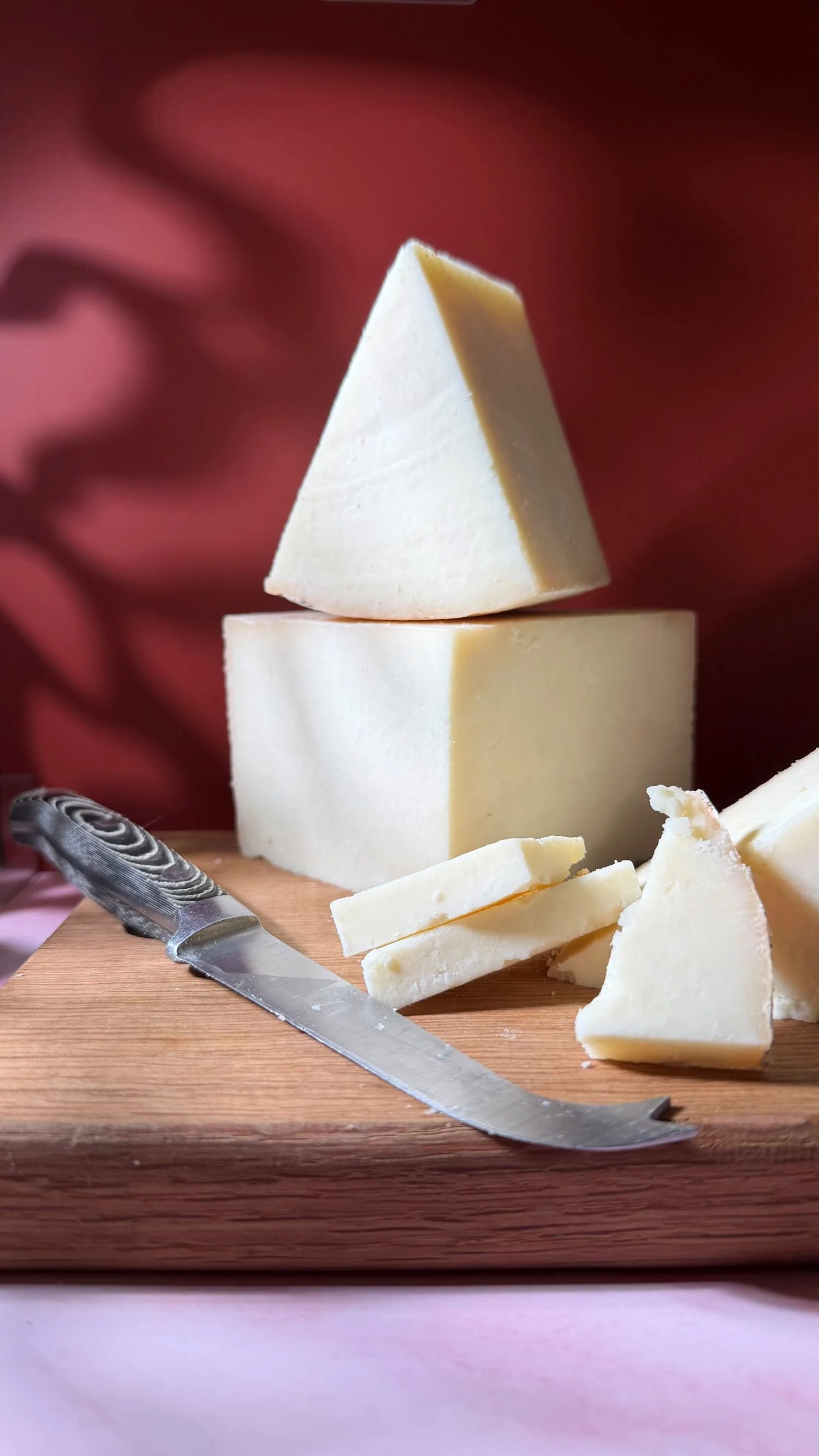
Wakebridge Cheese, Photo Credit: TRCP
HISTORY
There’s something quietly brilliant about Wakebridge Manor Creamery. It’s young, it’s still finding its feet, and yet it already feels anchored to the land in a way that a lot of older dairies have forgotten. Perched on the edge of the Peak District, the farm sits high, exposed and unapologetically rural. Dan joked that it can be sunny in Nottingham, but snowing by the time he arrives at the dairy. That tells you a lot before you’ve even tasted the cheese.
Wakebridge wasn’t created to chase trends. It exists because cheesemaking once belonged here. There’s documented evidence of cheese being made on this farm in the 19th century, including a newspaper clipping recording cheese from Wakebridge being entered into the Alfreton Agricultural Show. In a county where only a handful of traditional cheesemakers remain, the aim is refreshingly grounded: make a proper English-style cheese again, but do it with sheep’s milk, a milk that used to be far more common than it is today.

Dan Mason, Photo Credit: Wakebridge Manor Creamery
LEARNING TO READ THE MILK
One of the first things Dan learned is that sheep’s milk refuses to behave politely. Across the season it changes dramatically. Spring milk comes in high in protein, giving a firmer, sometimes brittle texture. As the year progresses the balance shifts, and by late autumn and winter the milk is richer and higher in fat, producing softer, squidgier cheeses. It means no two makes are truly the same, and it means the cheesemaker has to pay attention.
Even with silage keeping feed relatively consistent, flavour still moves. There are grassy notes that appear at certain points in the year, sometimes unexpectedly. And then there’s the sheepiness. A subtle lanolin character most of the time, but one that can step forward in autumn when the milk becomes more concentrated. Dan’s favourite batches tend to land in mid-summer, when everything feels aligned. July through September, he says, is where Wakebridge really sings.
Reading the milk has become second nature. Before the make even starts, Dan is tasting, smelling, measuring acidity as soon as the milk hits the dairy. Those early readings give clues about protein levels and how fast the make will run. High solids, quick set, or a slower, more cautious day ahead. It’s instinct backed up by numbers, a very modern approach to something deeply old.
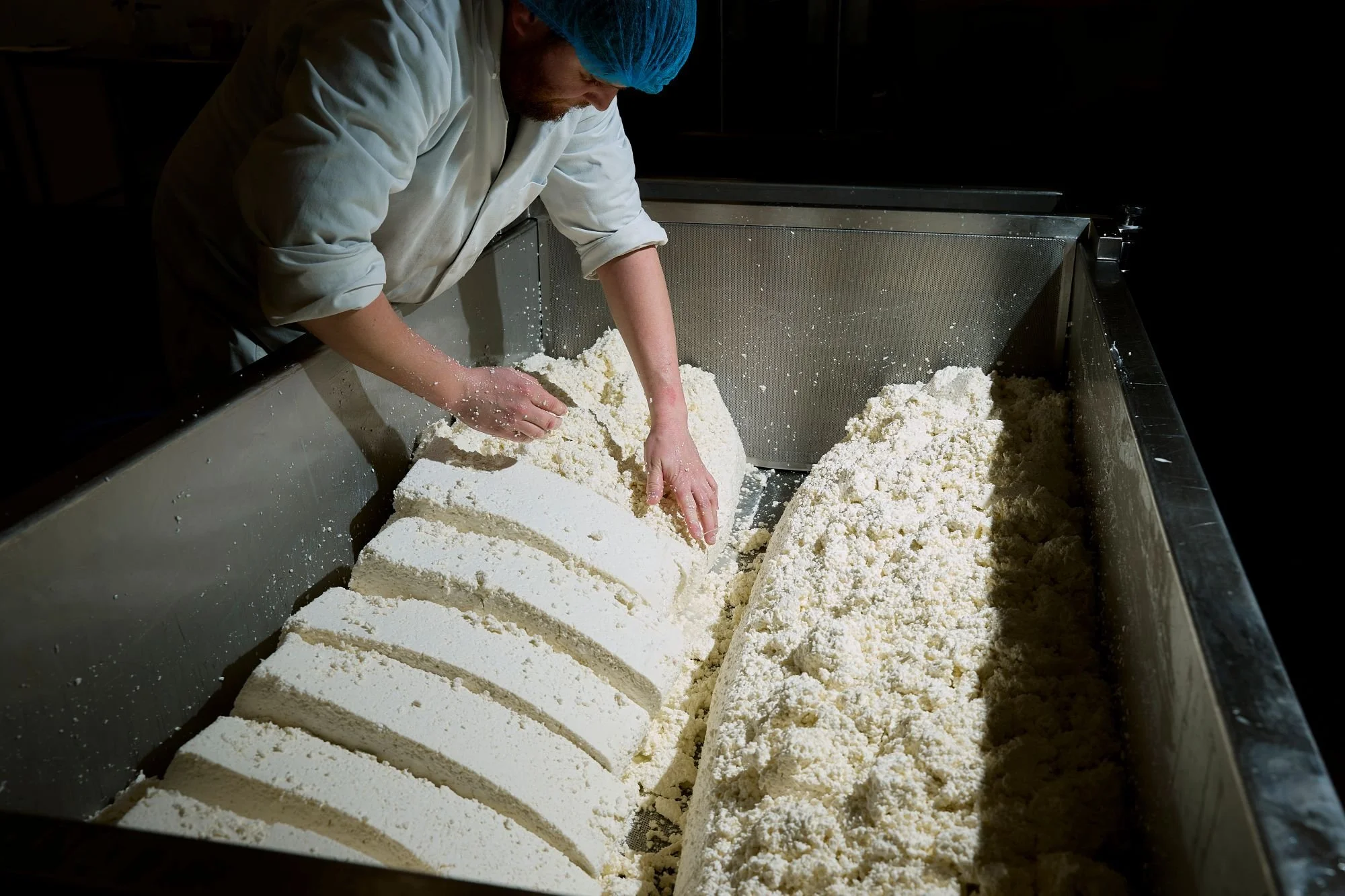
Working the curd, Photo Credit: Wakebridge Manor Creamery
HARD LESSONS
The first winter was a hard lesson. Fat levels rose, but the make stayed the same as summer. The result was cheese with too much moisture, a bit slumped, and a sharp, sour tang that nobody was aiming for. Not blue, but not happy either. The solution wasn’t panic. It was patience. Longer ageing, more moisture loss through the cloth, and time for savoury flavours to emerge. Some batches never became perfect, but they became interesting, usable, and instructive.
That honesty runs right through the dairy. Not every cheese has to go to the same place. Stronger, saltier batches might end up grated over pizzas at a local restaurant. More balanced wheels are saved for cheeseboards, with the story explained clearly. This is real cheese logic, not compromise.
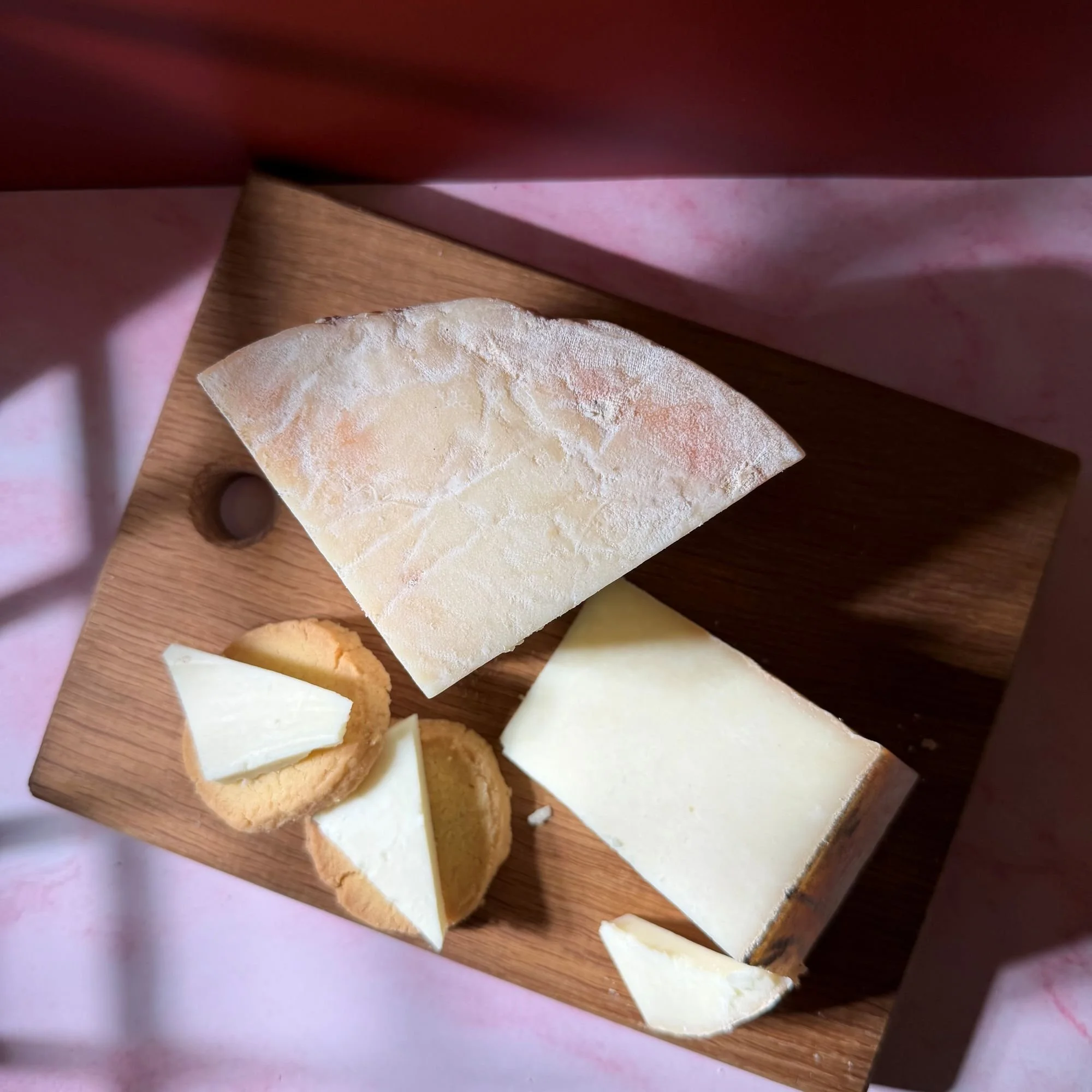
Wakebridge Cheese, Photo Credit: TRCP
HOW IT IS MADE
Wakebridge itself is made in a way that feels reassuringly straightforward, but with sheep’s milk adding its own personality. The milk is pasteurised using a high temperature short time method, enters the vat at around 31°C, and is ripened with a British territorial starter culture. Sheep’s milk sets fast and hard. Curds are cut small, scalded gently over about 40 minutes, whey drained, then cut again into larger blocks. There’s no cheddaring or stacking, just careful turning while acidity develops. Dan is constantly measuring, tasting, watching. The make is taken to around 0.45 acidity, roughly pH 5.3, higher than many cheeses, but key to the texture he wants. After milling, the curd is moulded, pressed, and clothbound the following day.
AFFINAGE
From there, time takes over. Some batches are ready at four months, others need nine or more. The ideal texture is tactile and very specific: a little bend between the fingers, then a clean snap.
If there’s one thing Dan has completely abandoned, it’s the idea that doing the same thing every day guarantees the same result. You influence the cheese for a day, then it has eight or nine months to become itself. The skill is steering toward a familiar destination while accepting that the route will always change.
Maturation has been the steepest learning curve. Get moisture and salt right and the cheese behaves. Miss them and you can end up with wheels that mature fast, or others that still feel curdy at ten months even though the flavour is flying. Rind development becomes a kind of crystal ball. Around two months in, when moulds start to bloom through the cloth, Dan gets a sense of where a batch is heading. A healthy, diverse rind feels promising. A slow, flat, tan surface suggests the cheese isn’t entirely comfortable, even if it usually sorts itself out eventually.
And that’s where Wakebridge really comes alive. It’s not about control. It’s about listening.
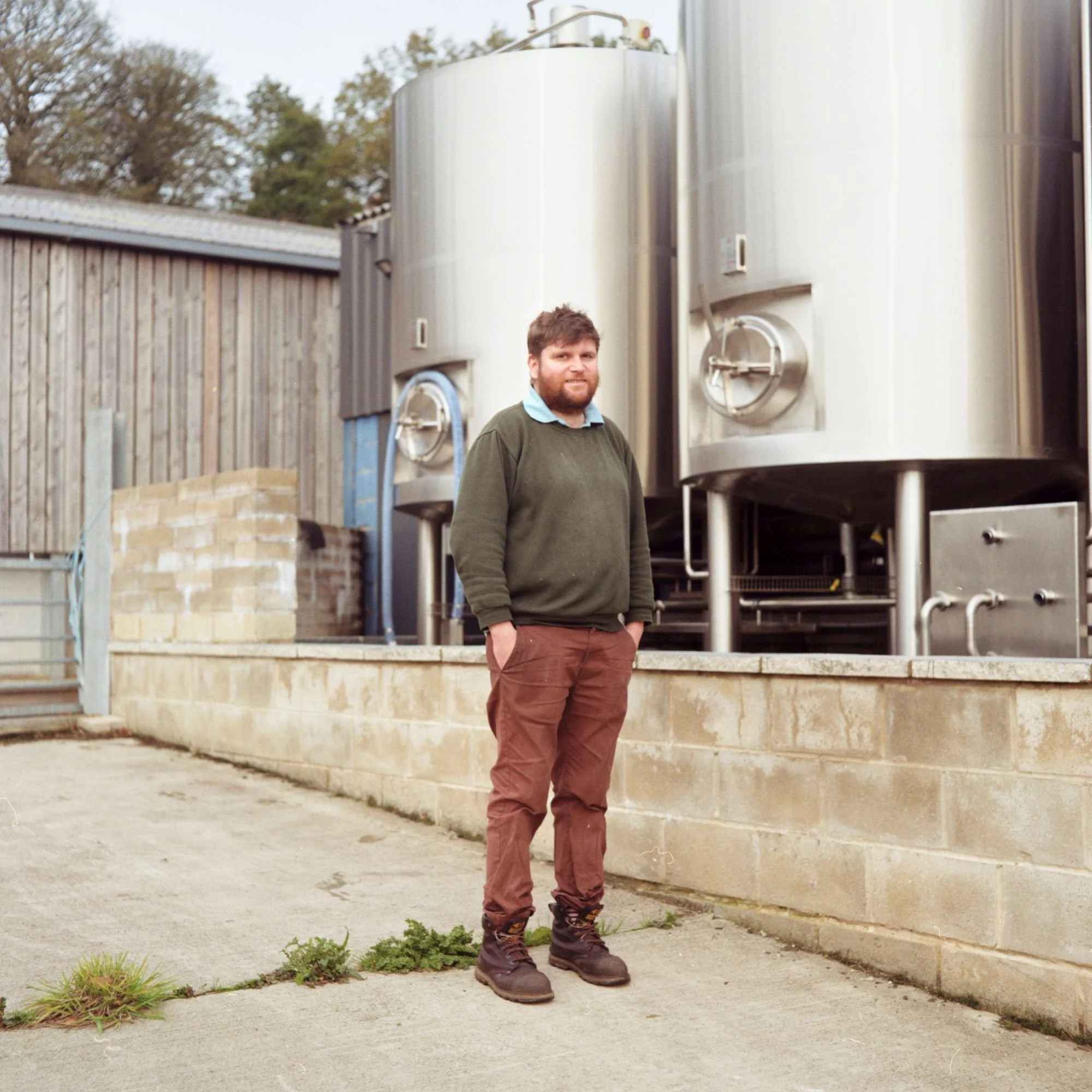
Dan Mason, Photo Credit: Wakebridge Manor Creamery
QUICK FIRE ROUND - OFF THE HOOF!
Best time of day in the dairy
Six in the morning, when the milk comes in and everything feels full of promise.
Milk you trust most right now
Late spring into early summer. Calm, balanced, well-behaved. Mostly.
Notebook or instinct
Notebook… but instinct is always lurking in the background.
The stage that still makes you slow down
Tasting it at nine months when it’s really good and thinking, “How on earth did I make that?”
The stage you enjoy the most
Make day. Watching milk turn into cheese in the space of eight hours never gets boring.
Biggest lesson from year one
You get what you get. Microbiology and the sheep are in charge.
Biggest change by year three
Thinking more about the business side. More customers, more milk, more cheese out in the world.
Best way to eat Wakebridge at home
Room temperature, with aubergine pickle. Non-negotiable.
One word you’re still wary of in the dairy
Dirt.
One word you hope people use more next year
Experimenting.
Wakebridge Manor Creamery feels like a dairy that’s happy to be young. Curious, slightly exposed, willing to learn in public. It’s cheesemaking shaped by land, season and sheep, with just enough science and confidence to let things happen. And honestly, that’s exactly how great cheese should be made. It is a real pleasure to be championing this brilliant cheese and helping more people find it.