HERO CHEESE Westcombe Cheddar
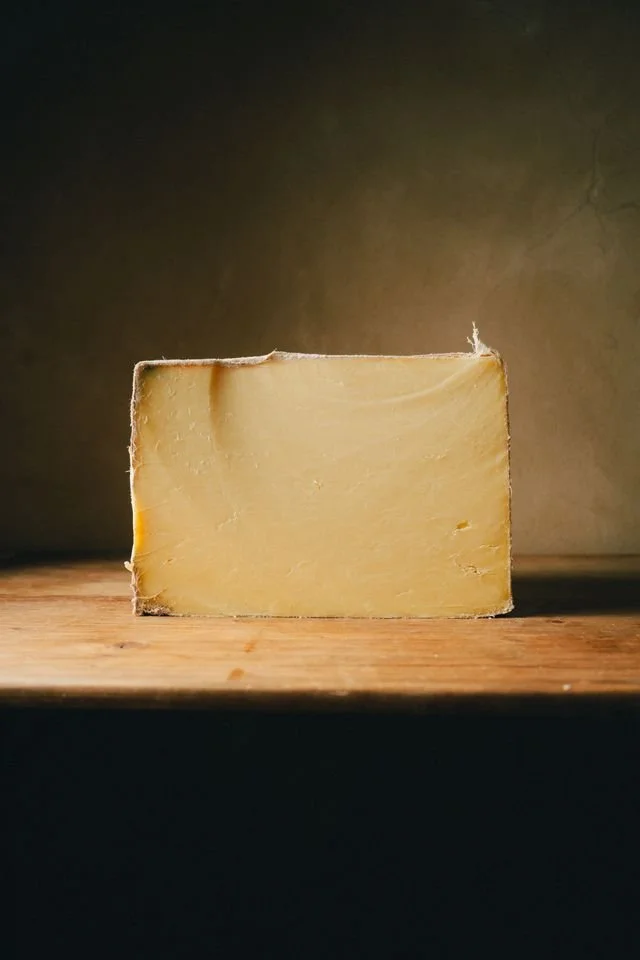
Westcombe Cheddar
A landscape of flavour
For Tom Carver, Westcombe isn’t simply a dairy farm that makes cheddar. It is a living system: soil, grass, cows, milk, people and cheese, all connected.
Cheesemaking at Westcombe dates back to 1879, although the farm has never stood still. Tom’s father joined the original family business more than 50 years ago, and over the decades the farm has constantly adapted. There have been pigs, different forms of dairy production and, at various points, some fairly extraordinary diversifications.
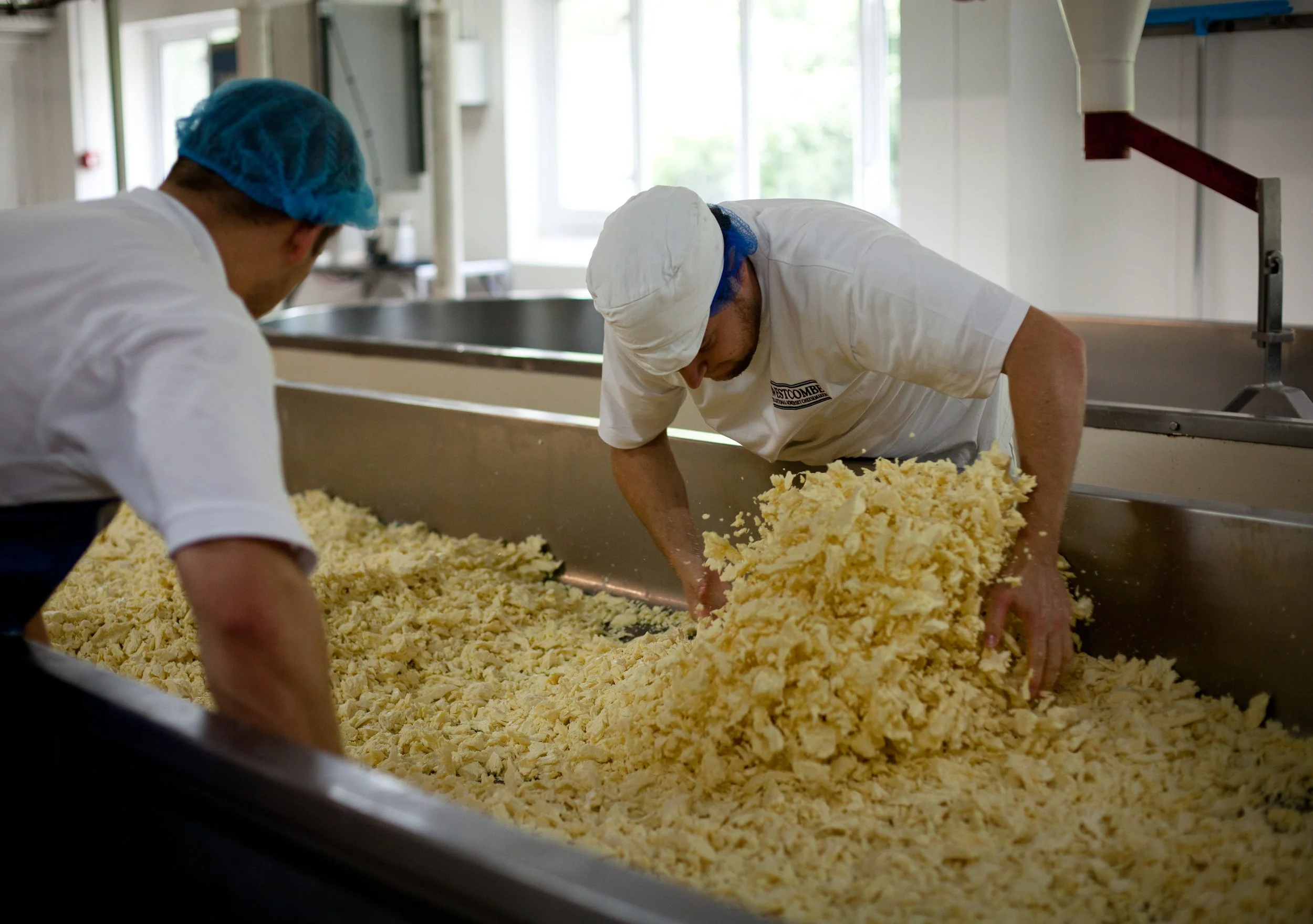
Turning the curds at Westcombe
That willingness to change remains part of Westcombe today.
When Tom returned to the farm after working as a chef in London, he began questioning some of the accepted rules of modern farming. Why fertilise in a particular way? Why grow certain grasses? Could the farm work more closely with what naturally wanted to grow there?
His father was receptive, but practical.
Ideas, Tom explains, are easy. Building a system that can support a farm, its employees and the production of food is considerably harder.
That balance between idealism and reality has shaped the modern Westcombe.
“Farming and food production should be a circular system,” Tom says. “You take something, but you have to put something back.”
For him, working with nature does not mean abandoning farming and allowing everything to run wild. It means understanding what the land is telling you.
Take the humble dock. Farmers traditionally see it as a weed, but Tom sees something else. Its deep taproot can break into compacted ground and help repair soil structure. Given enough time, once its job is done, it may disappear.
The farmer’s challenge is to understand that process and find ways of achieving the same result while still producing food.
It is an approach based less on controlling nature and more on creating resilience.
“Nature is messy,” Tom says. “It’s opportunistic.”
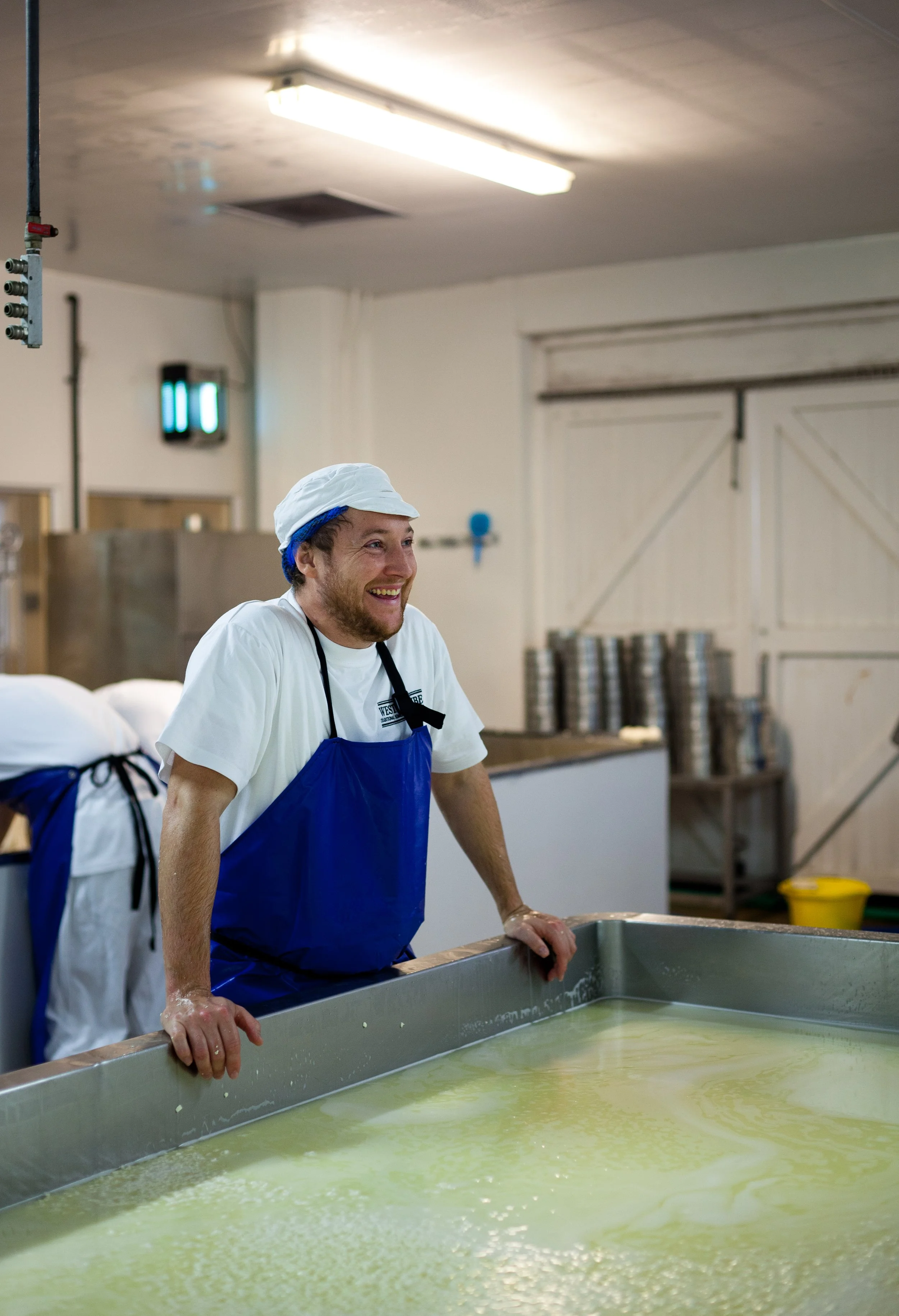
Tom Carver
And that messiness matters when it comes to cheese.
Tom is cautious about simplistic ideas of terroir. A cow eating a particular flower does not suddenly produce milk tasting directly of that plant. The relationship is far more complex.
Healthy soil supports a more diverse pasture. That diversity supports the animals and the wider ecology of the farm. In a raw milk cheese, the microbial life associated with that entire system can ultimately become part of the character of the cheese.
“You’re building it literally from the ground upwards.”
For Westcombe, cheddar becomes the means of capturing that place.
Tom describes it less as a rigid recipe and more as a method of preserving the milk produced by this particular Somerset landscape. The aim is not to make a cheese that conforms perfectly to somebody else’s definition of cheddar, but to make the best possible expression of Westcombe.
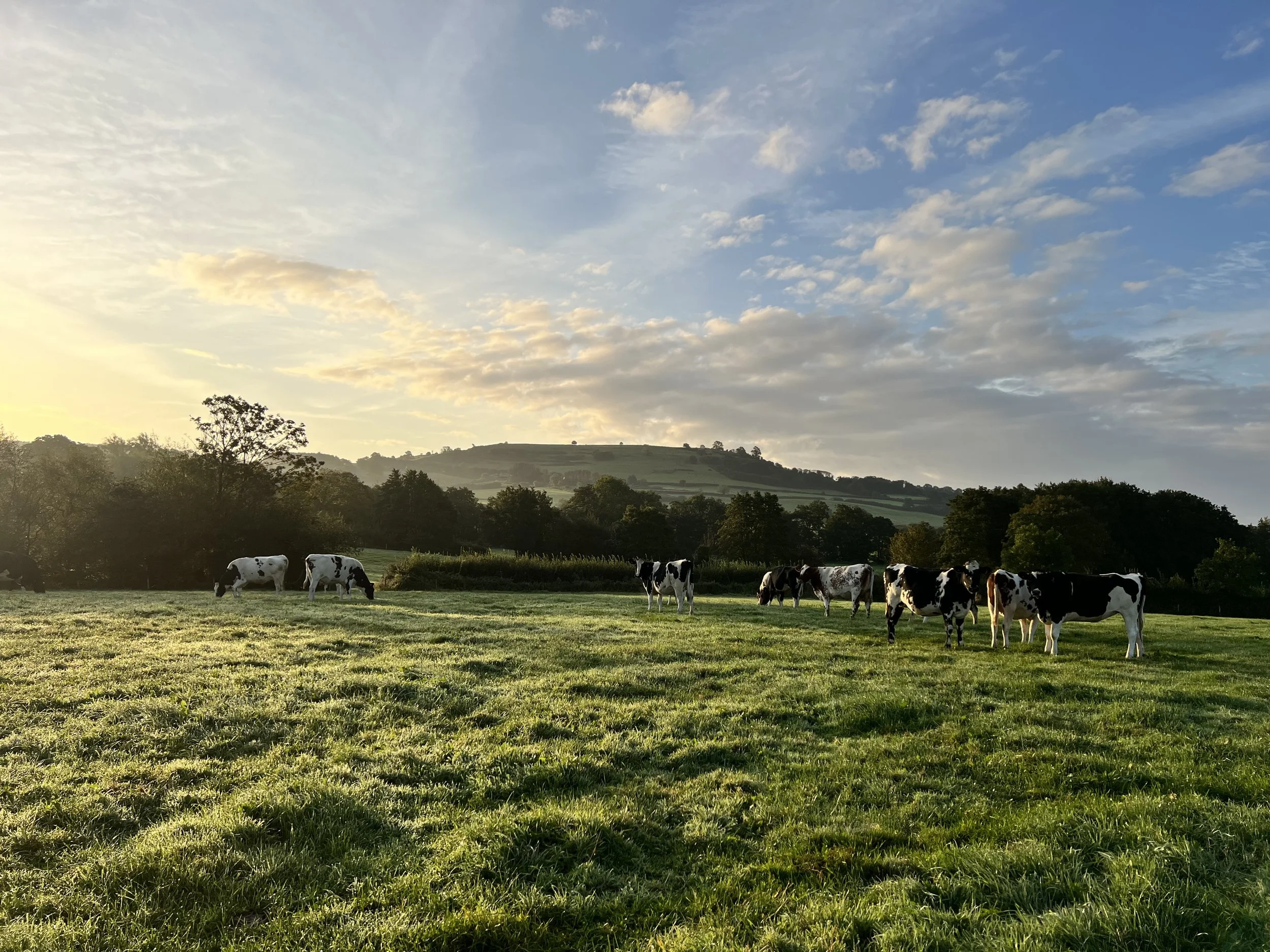
The beautiful Somerset landscape
And when it works, Tom says, texture is fundamental.
“Flavour is always carried by texture.”
A great piece of Westcombe begins with an initial spark before opening out into something much deeper: sweetness, butterscotch, savoury notes and umami unfolding as you eat.
“If you can paint a landscape in a flavour profile, that’s what we’re trying to achieve.”
There is also inheritance here.
Tom’s father is now 82 and remains deeply involved in the farm. It was he who made the difficult decision to return Westcombe to traditional unpasteurised cheesemaking, laying the foundations for what exists today.
Tom sees their responsibility as extending beyond themselves.
Farmers, he believes, are temporary custodians. Their legacy should not simply be buildings or machinery, but healthier soil, a resilient farm and perhaps a different way of thinking about food.
Ultimately, Westcombe Cheddar is the result of all of those things.
A piece of Somerset, preserved in milk.