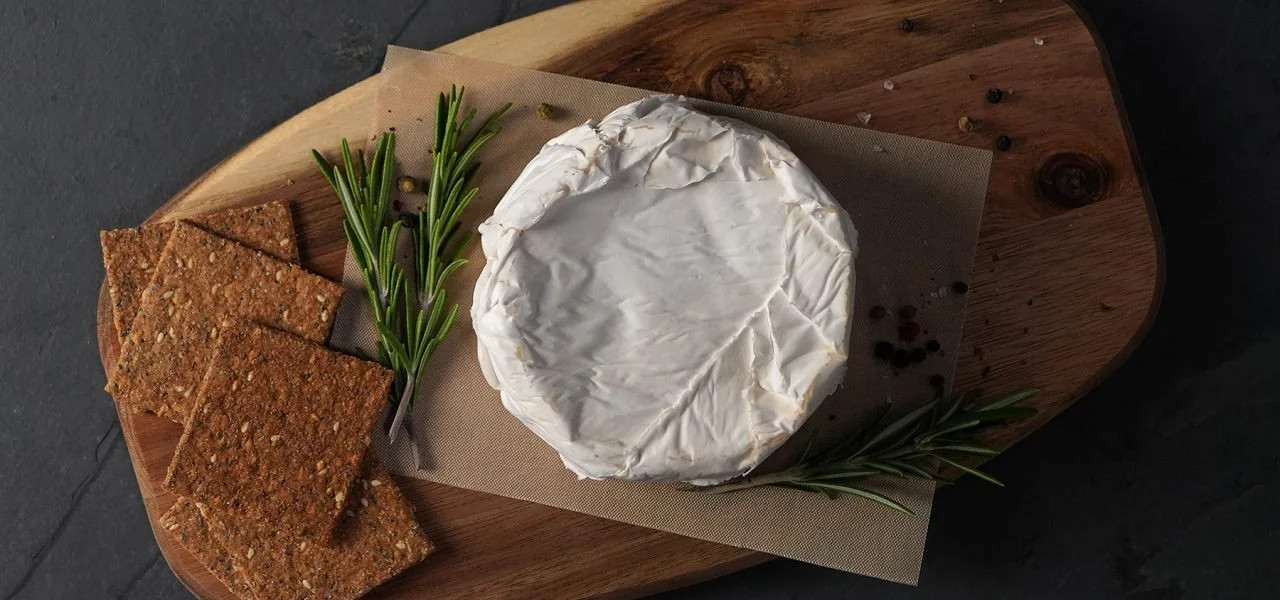
Darling Howe
From Rugby to Real Cheese
Mark Lee – Torpenhow Farmhouse
From international rugby stadiums to the pastures of Cumbria, Mark Lee’s extraordinary journey is one of family, farming and a determination to produce something genuinely special. At its heart is Darling Howe, a cheese that tells the story of the land it comes from.
A Different Kind of Game
Not many cheesemakers can claim to have played rugby in front of 80,000 people, competed in two Commonwealth Games and a World Cup, served in the British Army and qualified as a solicitor. But Mark Lee is no ordinary cheesemaker.
Signing his first professional contract with Edinburgh Reavers at just 19, Mark represented Scotland Under-21s before travelling the world playing Rugby Sevens. A career in the Army followed, along with three years practising law.
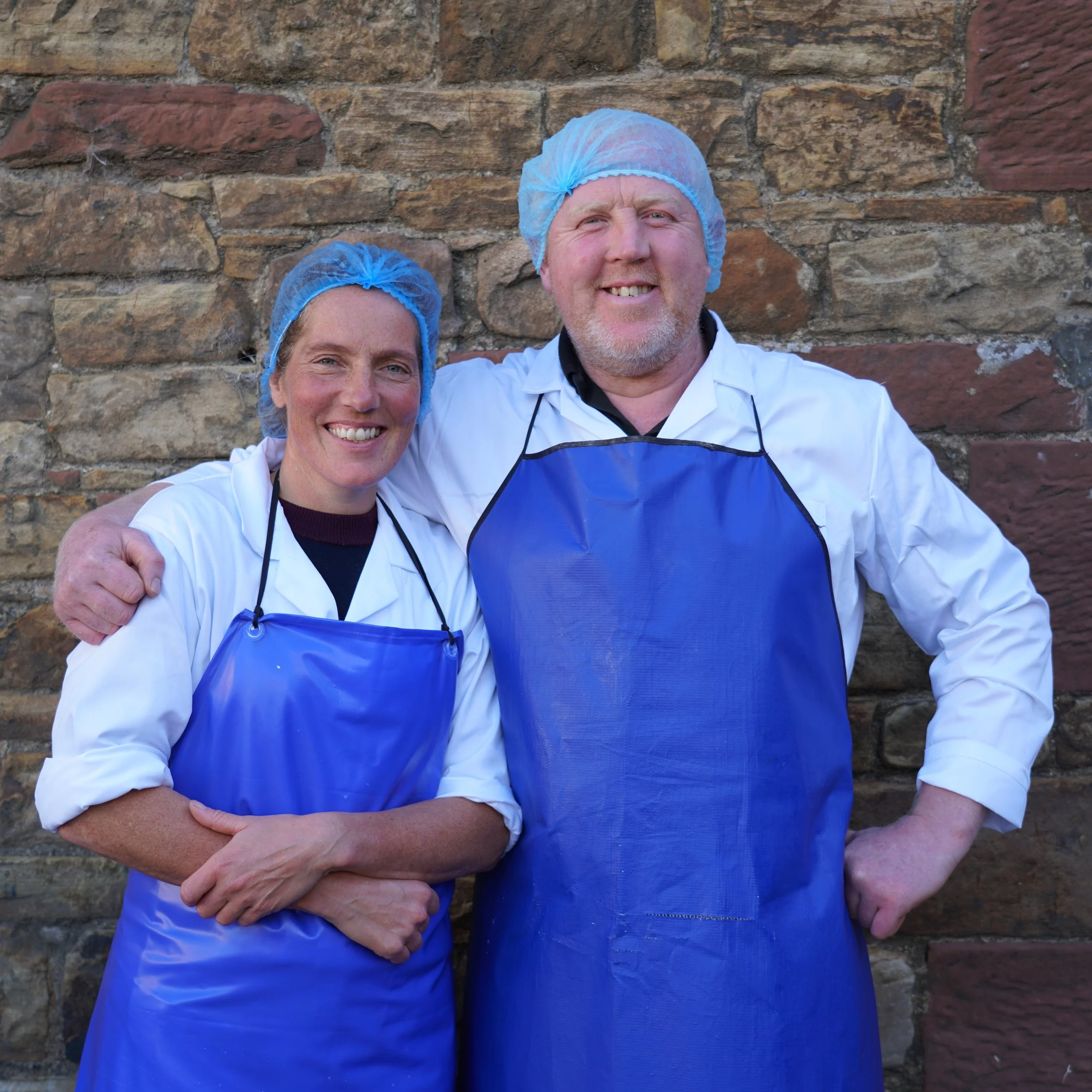
Mark & Jenny Lee
Then came an entirely different challenge.
Around 2011–2012, Mark and his wife Jenny returned to her family’s farm in Cumbria with their two young daughters, joining Jenny’s parents at Park House Farm.
The farm, originally an old deer park, is beautifully self-contained, its fields surrounding the central buildings. But behind this idyllic setting was an intensive dairy operation.
Their Holstein cows were housed indoors, producing around 10,000 litres of milk annually, supported by a diet of silage, soya, wheat and other concentrated feeds.
Then, in 2015, the milk price collapsed from 28 pence to just 15 pence per litre. Something had to change…
A Revolution in the Pasture
Mark and Jenny began moving towards grazing, bringing in Jersey-Friesian cows from Ireland. But one experience would change their farming philosophy completely.
Following advice from an agronomist, Mark sprayed part of his pasture with Roundup. Weeks later, when the cows returned, he watched in astonishment as they grazed the unsprayed strips in almost perfectly straight lines.
For Mark, it was a defining moment.
He began questioning conventional farming practices, researching soil health, plant diversity and animal nutrition. In February 2017, they stopped using chemical fertilisers, herbicides and pesticides altogether.
Mark also began questioning the effects of grain on the animals’ digestive systems.
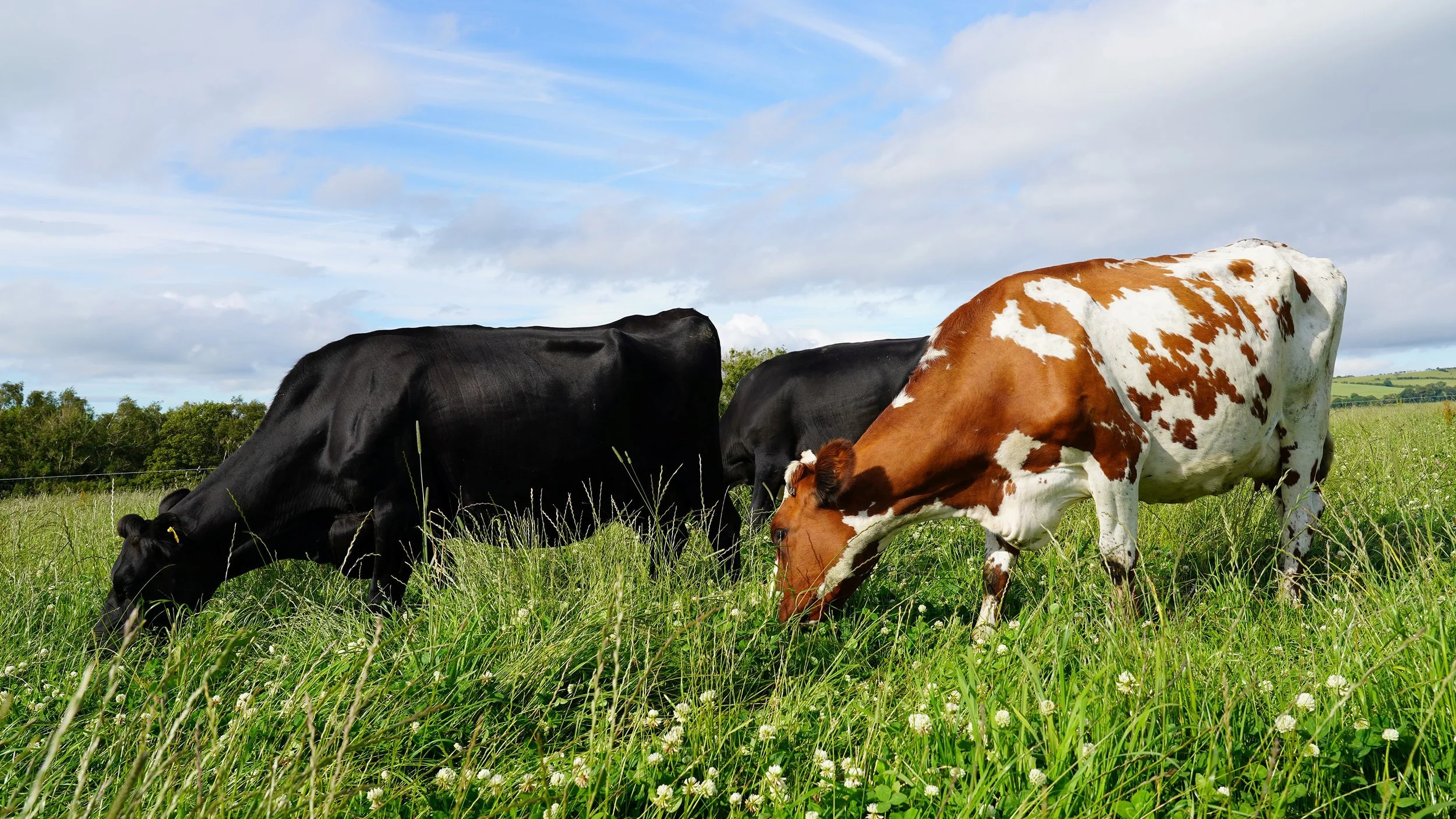
Cows grazing lush organic and diverse pastures at Park House Farm - Torpenhow Farmhouse Dairy
“Cows are gluten intolerant,” he argues.
Interestingly, veterinary research has identified intestinal damage in young, pre-ruminant calves fed wheat gluten. Other studies demonstrate that rapidly fermenting wheat starch can lower rumen pH and contribute to inflammation in adult cattle. Although this does not establish coeliac-type gluten intolerance in adult cows, it adds scientific context to Mark’s concerns about conventional grain feeding.
Today, their cows are entirely pasture-fed, grazing outside for more than 300 days annually. Diverse pastures, rotational grazing and access to hedgerows allow the animals to select from a wide variety of plants.
But perhaps the most profound change came from Jenny.
“The most life-changing decision on the farm has been to keep the calves with the cows. And that was driven 100% by Jenny.”
Darling Howe – A Taste of the Land
In 2019, an old hay barn became their cheesemaking dairy. With guidance from cheesemaker Kathy Biss, their next adventure began. By March 2020, they had produced around a tonne of cheese. Then lockdown arrived.
Much of their cheesemaking education became a process of experimentation, determination and learning from mistakes.
Their rich pasture-fed milk was producing approximately a kilogram of cheese from just six or seven litres, compared with the more usual ten.
Among the cheeses to emerge was Darling Howe, named after the field behind the farmhouse. Howe, an old Saxon word for hill, connects the cheese quite literally to its birthplace.
Originally experimenting with Cheddar and blue cheeses, the couple encountered problems with blue mould spores in their small dairy. Their attention turned towards a soft, bloomy-rinded cheese that could capture the character of their milk without months of maturation.
And Darling Howe has a personality all of its own.
During summer, the cheese can be firmer, with a slightly chalkier texture. As the seasons change, it becomes softer, creamier and sometimes wonderfully runny.
It follows the rhythm of the farm rather than a rigid industrial formula.
Darling Howe has since earned three stars at the Great Taste Awards.
Where the original commodity dairy employed one person, the business now supports fifteen. Mark is also exploring raw milk cheesemaking to capture more of their pasture-fed milk’s distinctive character.
For Mark and Jenny, success is about demonstrating that a family farm can thrive economically, environmentally and culturally without surrendering its principles.
And perhaps that is what makes Darling Howe such a fitting Hero Cheese.
Behind its soft rind lies a remarkable story of change: from professional rugby to regenerative farming, from commodity milk to artisan cheese, and from simply producing more to believing that how we produce our food matters just as much.
Real Cheese – Real Stories – Real People