CHEESE CHAT Jake Goldstein
Primrose Creamery at Welbeck: Jake’s season-led cheese, from first stir to first release

Cheesemaker - Jake Goldstein
THE JOURNEY
If you’ve ever launched a food business at the “silly” end of the year, you’ll know the mix of adrenaline and mild chaos Jake is living on right now. Primrose Creamery is new, the make room still smells of fresh paint, and the recipes are moving from bench-top trials to proper batches. But inside that newness is an old-school idea: cheeses that change with the milk, with the weather, with the day. As Jake puts it, “a winemaker has a vintage every year; a cheesemaker has a vintage every day.” It’s the north star for Primrose, listen to the milk, make what the milk wants, and let the seasons be visible in the rind.
Jake’s road to cheese wasn’t linear. He ran bars and restaurants in Brighton before the pandemic forced a reset and a rethink. Food and drink were always “the thing,” but he wanted a trade, not just a job, something you can carry in your hands and in your head. That itch led to Academy of Cheese study, then to Monkland and Neal’s Yard Dairy, where he learned the rhythm and the reality of production. The plan to start a creamery was always there. It was just a question of when.
The “when” turned out to be Welbeck, on the historic estate that now houses the School of Artisan Food and a cluster of craft producers a bakery next door, brewery opposite, meadery and distillery on site, farm shop, museum, the lot. Primrose sits in the middle of that ecosystem, and Jake’s already teaching cheese modules to university students while building short courses for the public next year. It’s not just tenancy; it’s community. Teaching, he says, makes him re-learn the science he thought he knew: milk composition, enzyme behaviour, the little levers you pull to shape flavour.
THE CHEESE
Two cheeses lead the opening lineup: Eggleston and Lindley. Eggleston is a lactic-set cow’s milk cheese, think spoonable freshness, thin rind, a style more familiar to French counters yet made from Welbeck milk and Jake’s process. The kinship with some Neal’s Yard goat makes is there in the method, but the point is not imitation; it’s translation into this place. Lindley is a different pleasure: triple cream energy with Jersey richness, all crème fraîche and cold butter notes, a texture that wants to be decadent but still clean. Getting that fat content to behave took months of trials. “At a certain point,” Jake laughs, “it doesn’t want to become cheese anymore.” Temperature, rennet rate, stir, set, cut, so many dials to nudge. The payoff came two weeks ago when a 300 cheese batch landed exactly where he wanted it. From ten litre bucket makes to scaled consistency: a landmark moment.
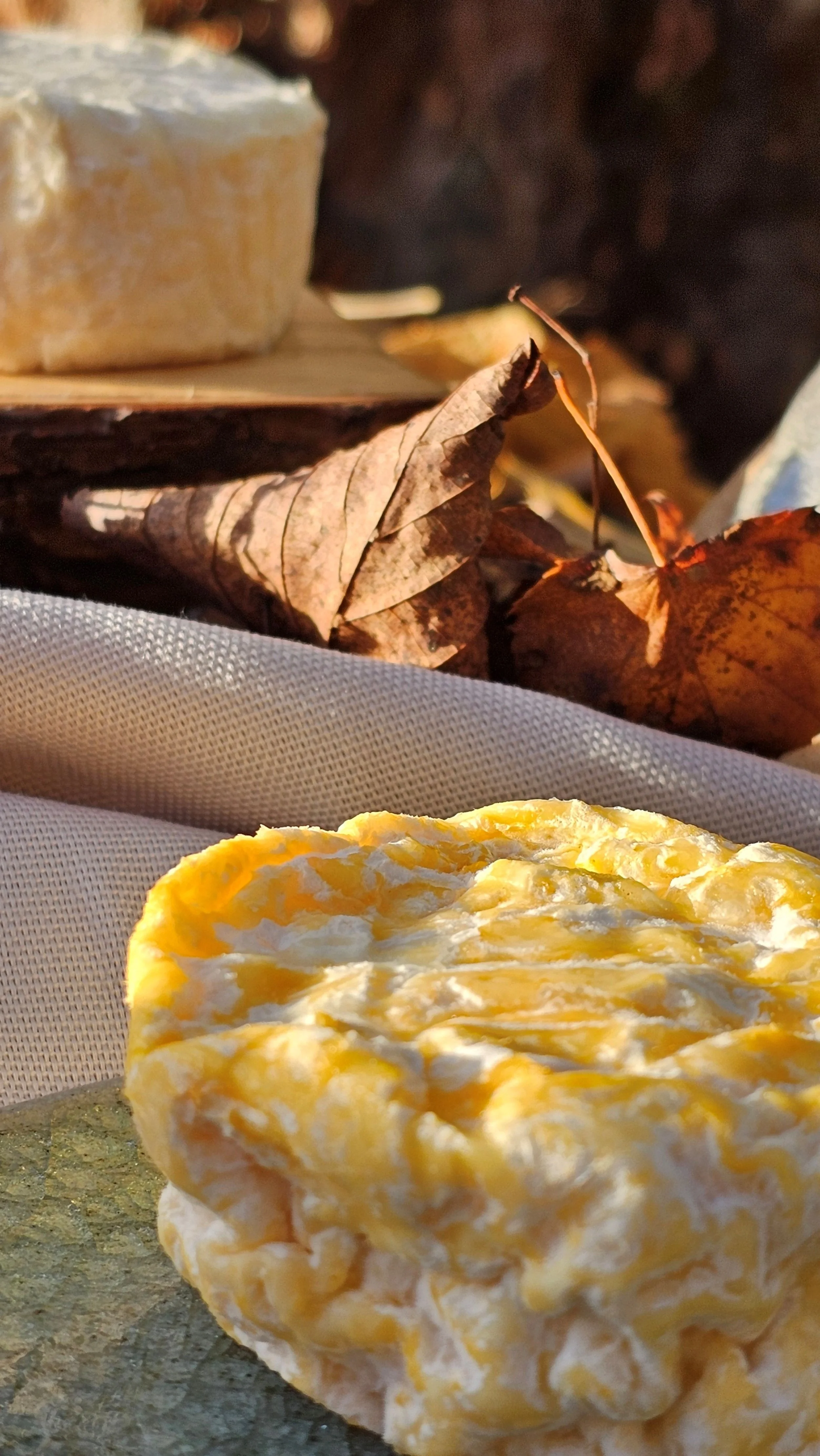
Lindley & Eggleston
Names matter here. Lindley nods to Elizabeth Lindley, a 19th-century dairymaid on the estate under the famously eccentric Fifth Duke of Portland (he really did build tunnels and an underground ballroom). Jake dug up an 1881 article about her, and he prefers naming cheeses after the “ordinary” people who actually kept the food culture going, while other businesses nearby lean into dukes and duchesses. It’s a neat statement of intent: primrose by name, people-first by nature.
THE MAKE
Milk-wise, Primrose works beautifully warm. The Welbeck herd is milked in the afternoon from about 15:20; Jake collects straight from the parlour, brings it back while it’s still body-warm, cultures around early evening and goes to work. It’s the opposite of chill, pasteurise, cool, reheat industrial choreography. The choice ties the cheese even closer to the cows and the day. It’s a story mongers can tell honestly: this was milk an hour ago; now it’s beginning its journey to your table.
HARD WORK
None of this romance hides the grind. In the early weeks, he was a one-man band: HACCP and HR in the morning, bookkeeping at lunch, marketing by email, and curds to cut by late afternoon. Finding a rhythm is the next frontier. He knows the temptation to “grow” too fast new kit, more milk, bigger runs, but he wants to put quality first, even if that means staying small for a while. Build a reputation, then build the rest.
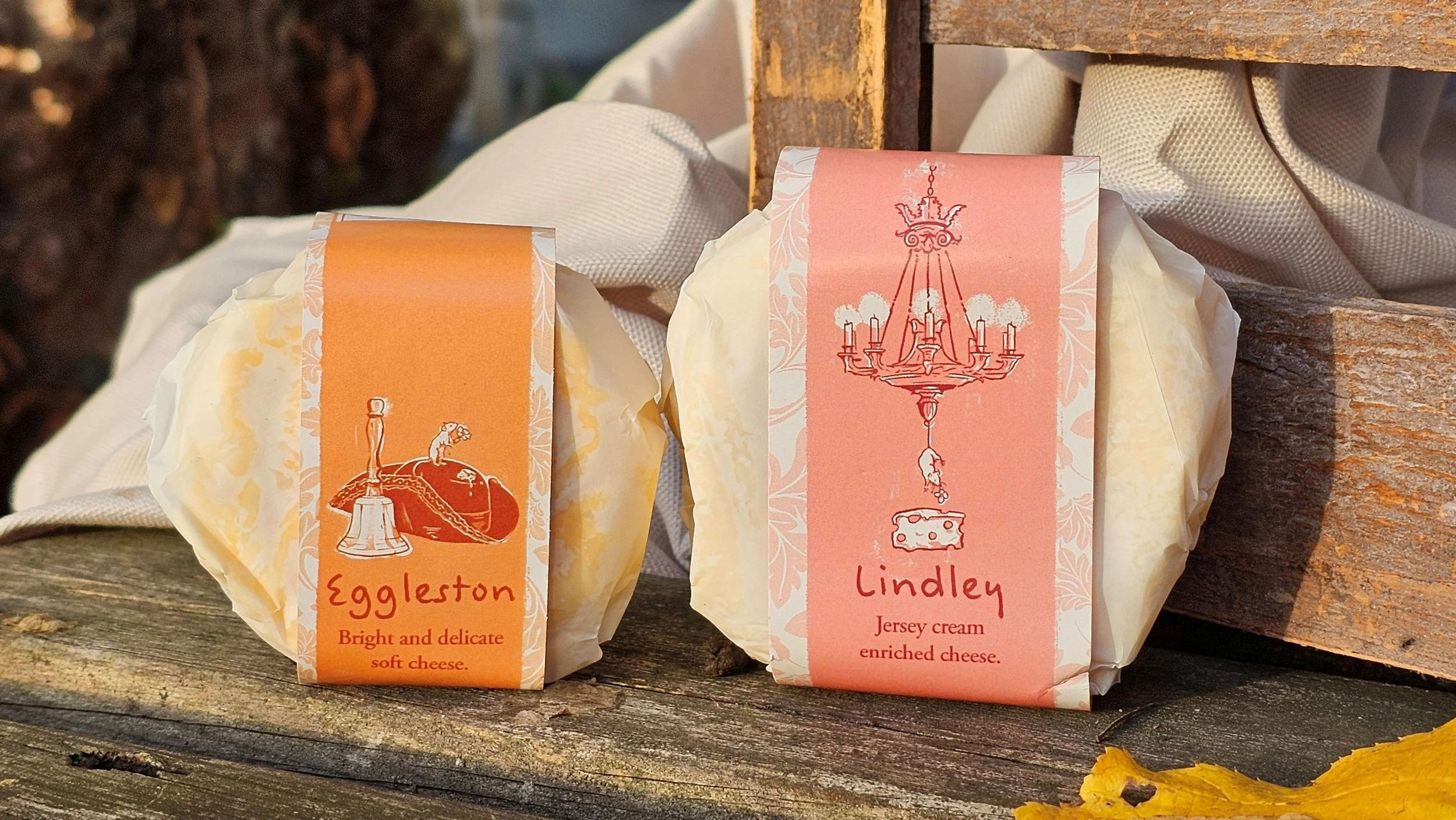
Beautiful cheese with a beautiful story.
CHEESE IDEAS
Yet ambition is bubbling. Alongside Eggleston and Lindley, Jake’s working on a revival of Colwick, the Nottinghamshire cheese that ran from 1765 to 1992, briefly resurfaced in the early 2010s, and then fell quiet again. Traditionally, Colwick is an unturned, lactic cow’s milk cheese with a gentle dimple in the top, a space that once invited cream or fruit as a thrifty celebration. The idea isn’t nostalgia for its own sake; it’s the opposite. “Take old things and build on them,” Jake says. Give people something rooted to eat that also feels new. France has a cheese for every village; Britain used to have more, then industrialisation and war pared it back. This lively new wave of makers is stitching the map together again.
THE TASTE
Taste-wise, Jake hopes first timers meet something distinctive. Not shouty, but precise: thin rinds, young sales, textures that shine when they’re clean, and flavours that feel big without tipping over. Young cow’s milk lactic styles are still underexplored on British counters; Primrose is a lovely argument for why that should change. And if you’re a monger reading this, take the “daily vintage” line with you the most helpful frame you can give to newer staff and curious customers. Raw milk cheeses show this most clearly, but the principle holds: it’s always today’s milk.

Oh my we could dive into this one! Eggleston Cheese - The Primrose Creamery
THE FUTURE
So what next? Keep making, keep selling, don’t go wrong. That’s the honest answer. Courses for the public will launch at Welbeck; more products will come when they’re ready; and if he can, Jake wants to be part of the broader effort to reconnect people to food real texture, real season, real time.
